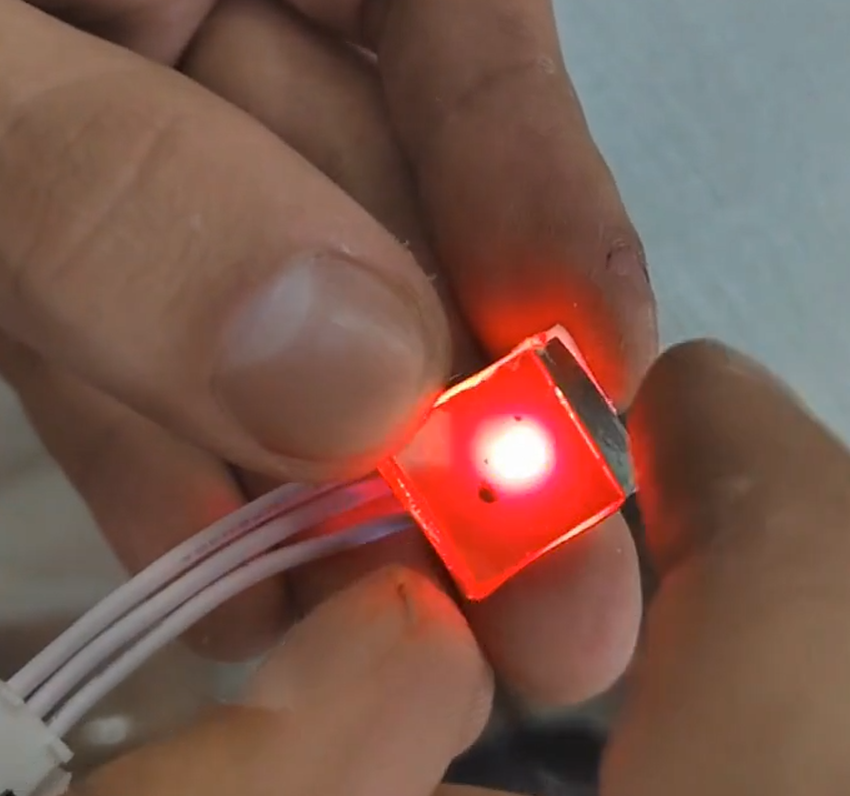
An electronic music artist asked us for a full-head performance mask covered with small square mirror tiles that also glow. The challenge: make every tile light up evenly without losing the disco-ball look when the LEDs are off.
The brief
- Realistic human head shape, 360° coverage including the back, fully anonymous.
- Square tiles of 10×10 mm (up to 12 mm), placed slightly at random like the artist’s current mask.
- Each tile must glow evenly — no bright dot in the middle — and the light must not be too strong, so the squares stay readable.
- No light on the face; dark acrylic over the eyes with a view forward and down to the DJ equipment.
- Ventilation, a mouth area that lets the voice through, a removable inner liner.
Why we started with samples, not the mask
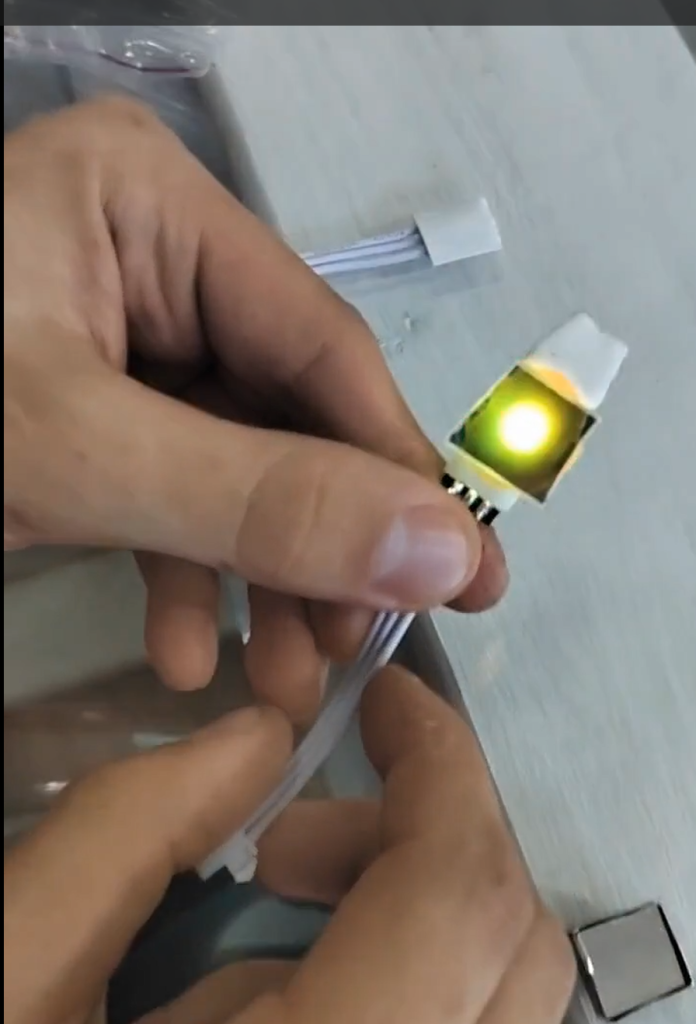
Putting LEDs straight under mirror tiles gives a single bright point and no side glow. Instead of guessing, we agreed a small paid sample stage and built test tiles first:
- Mirror tiles with CNC-cut cavities for the LEDs.
- Matte white acrylic tiles for a soft, even glow.
- One-way mirror tiles with an LED behind them — mirror when off, colour when on.
- High-density LED panels from our screen mask with 1×1 cm tiles on top.
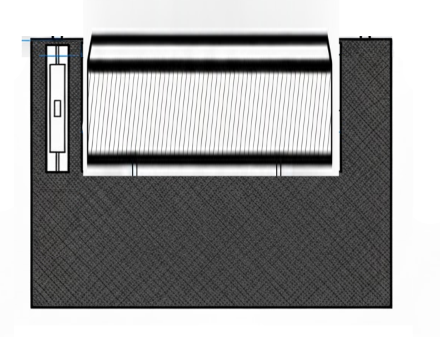
We also tested a side-lit design: a 3D-printed cell with a hidden groove for a thin LED strip, so the light comes from the edge and creates a halo around the mirror.
What we learned
The first variant looked like a focused point; a diffuser helped, but the glow was still too concentrated. The next step was acrylic diffusion and small 2×2 or 3×3 LED cells, so one tile reads as one solid square of colour. The client confirmed the priority: an even colour glow matters more than the mirror effect.
Next stages
- The client chooses the tile look from photos and video of the samples.
- 3D model of the mask from a head scan.
- Final approval, then production.
Want a mask with an unusual light effect? See how custom orders work.