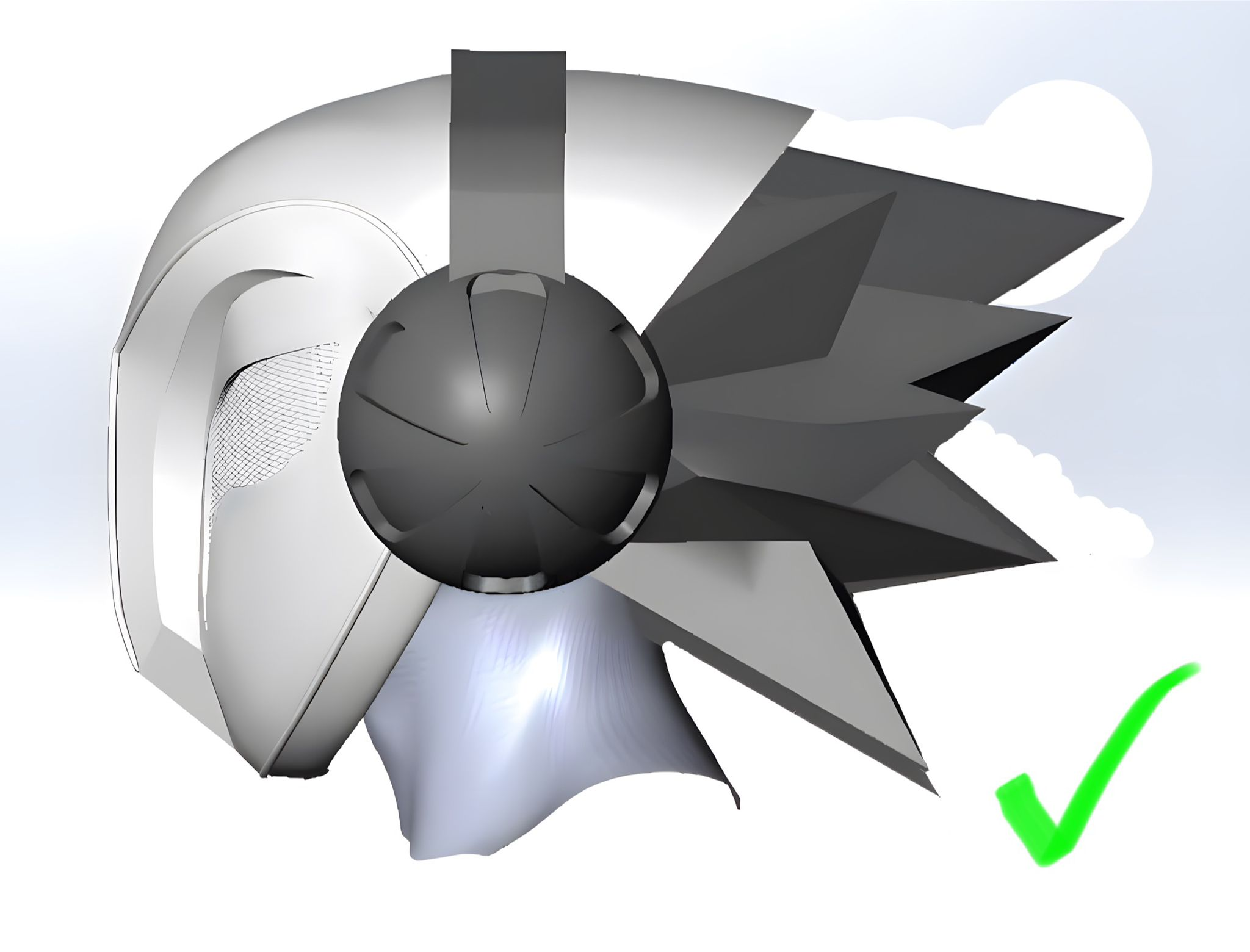
A performer already had a low-poly character mask and wanted a proper stage helmet in the same style: spikes as hair, large headphones and a black visor. This case shows why we lock every detail in the 3D model before anything is printed.
The brief
- Start from the client’s existing mask files and head measurements, and keep its identity.
- Streamlined, narrow and close-fitting — not bulky.
- Spikes like in the reference, smooth (not low-poly) headphones.
- Black one-way visor: you see out, nobody sees in.
- Ventilation and minimum fogging, low-voltage electronics fully insulated against sweat.
Three rounds of changes
The narrower shape was right from the start, but the client asked for three aesthetic fixes before printing:
- Headphones — back to the larger, more expressive shape from the first render.
- Spikes — a stricter, even structure with more volume, matching his character model.
- Back of the helmet — a specific gap geometry so it sits properly without making the head wide.
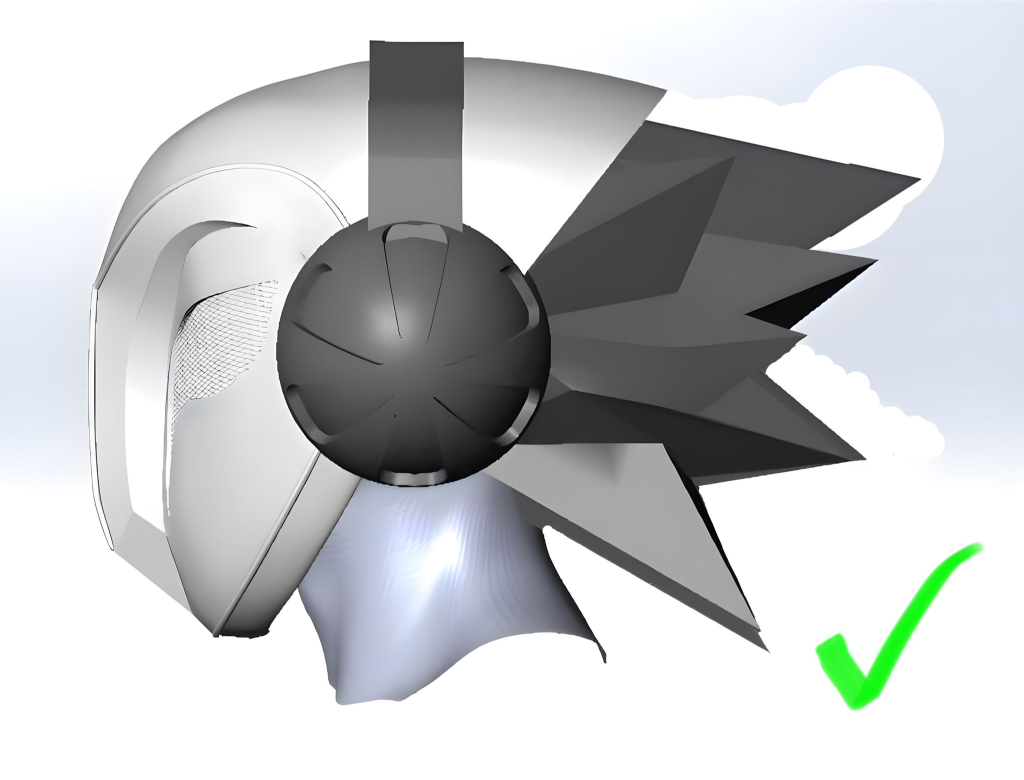
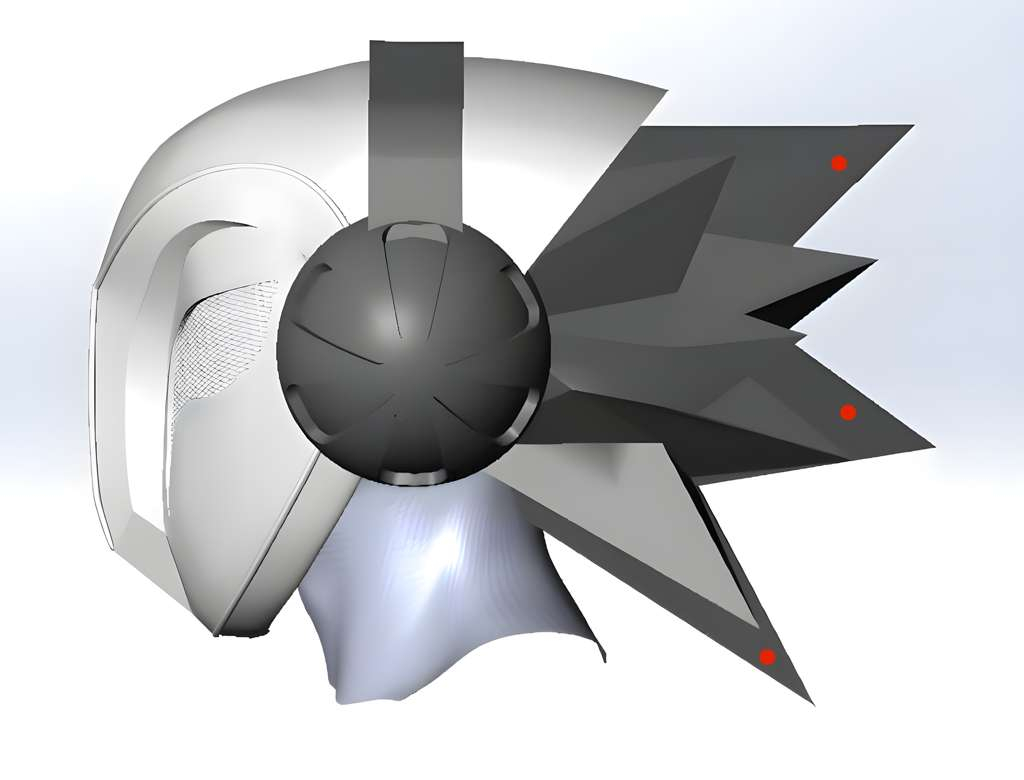
Later the client sent a reference with slightly moved eye openings, placed exactly in front of his eyes for the best field of view, and finally small changes to three spikes on the cap. All of it was done in the model — no reprinting.
The takeaway
Changes in a 3D model cost hours; changes after printing cost days and materials. That is why every custom order goes through render approval first.