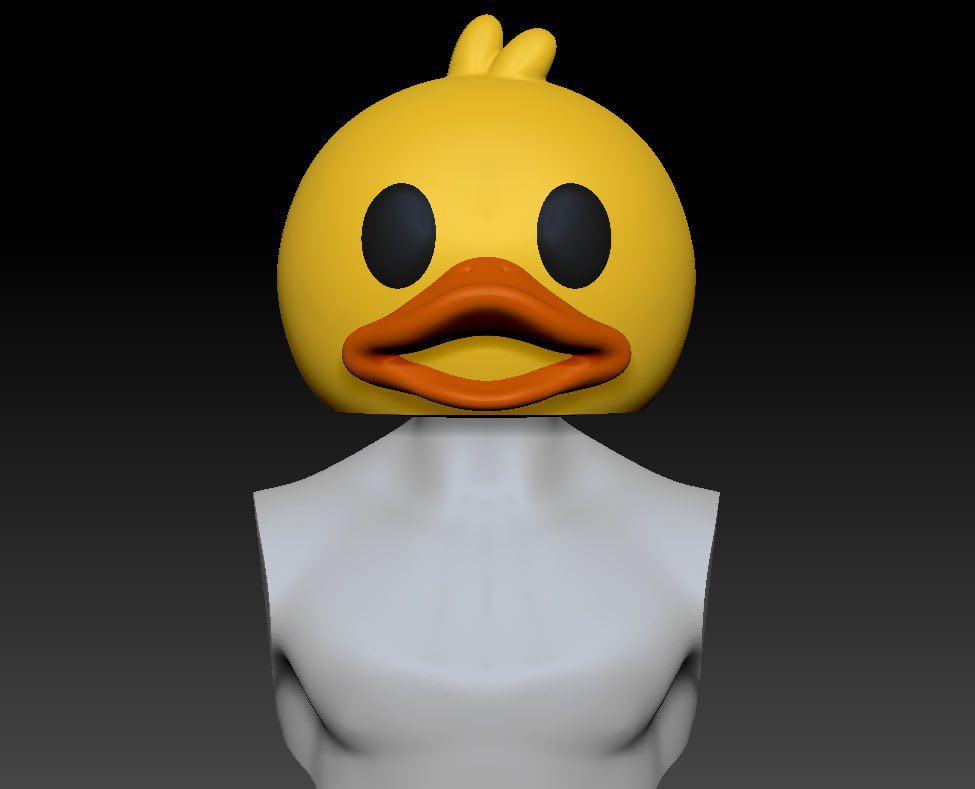
A DJ came to us with an oversized duck-head helmet that looked great but had one big problem: he could barely see his equipment through the beak. The task was to make a new helmet that keeps the character and fixes visibility and comfort.
The brief
- Big duck head, cute but sleek, premium stage look.
- Glossy yellow shell, rigid orange beak that holds its shape.
- Light only in the eyes and the beak — no glowing shell, no video screen.
- Worn for at least two hours: inner cap, chin strap, stable during movement.
- Ventilation with a small fan and room for in-ear monitors.
- Head size M, 55 cm.
Visibility first
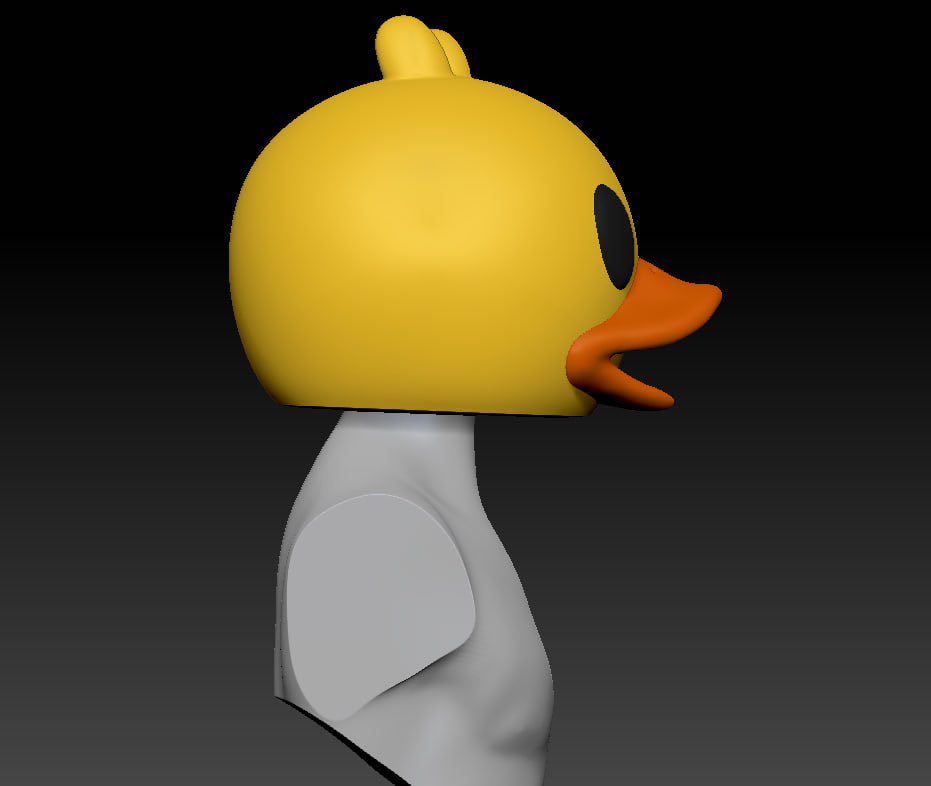
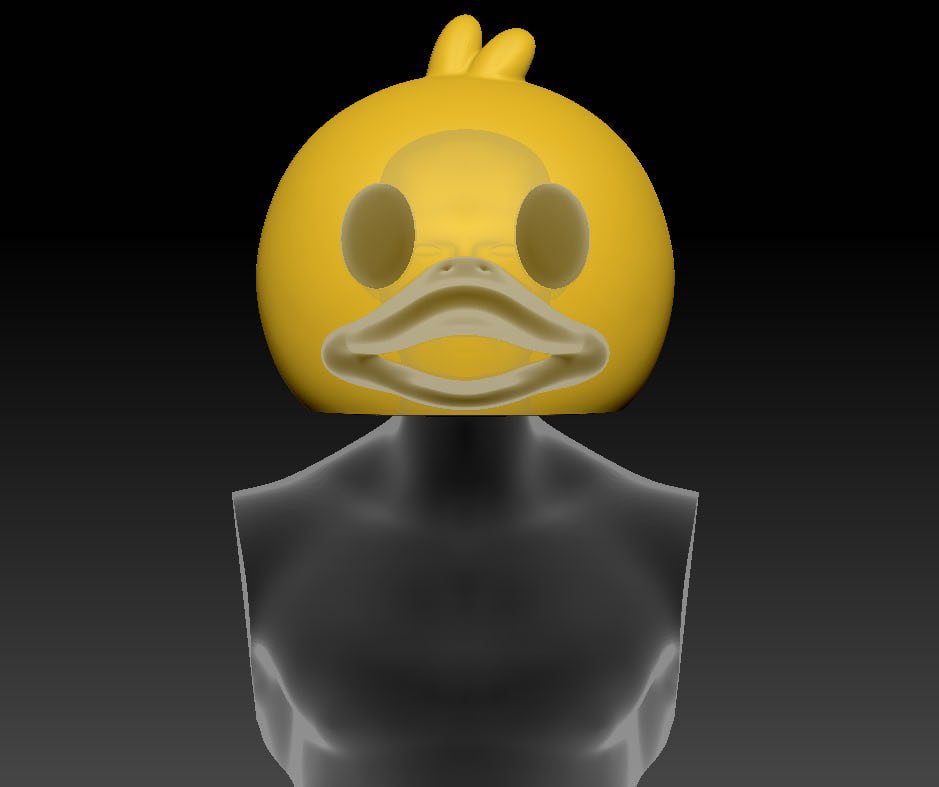
Visibility was set as the main priority next to comfort. We work out hidden viewing zones, mesh and technical openings in the 3D model, so the artist can see the mixer and the crowd while the eyes of the duck stay intact from outside.
How it is built
- 3D model and renders for approval.
- 3D printing with structural reinforcement — fibreglass and epoxy resin.
- Filler, sanding, primer, base colour and glossy clear coat for a smooth, seamless, scratch-resistant surface.
- LEDs in the eyes and beak, low-voltage electronics, fan.
Timeline
Design and development take about 1–2 months, production about one month. For a show date in August, the project should start in May.
Planning a character helmet for your shows? Here is how we work.